Spec Battle: Nzxt Function Elite Mini Tkl vs Acemagic F3A Mini Pc — Is It Worth Upgrading?
The tech landscape is currently witnessing a fascinating convergence of form factors. For years, the desk setup was clearly partitioned: the keyboard was a peripheral, and the computer was a separate, often bulky container of silicon and fans. However, as "miniaturization" becomes the dominant trend of the mid-2020s, many enthusiasts are finding themselves at a crossroads. On one hand, we have the "Mini TKL" (Tenkeyless) movement, which seeks to condense the input experience into a premium, hyper-tactile slab of aluminum and mechanical switches. On the other, the "Mini PC" revolution has reached a point where an entire Windows 11 workstation can fit into a chassis not much larger than a stack of coasters.
Enter the Nzxt Function Elite Mini Tkl and the Acemagic F3A Mini Pc. At first glance, comparing a mechanical keyboard to a desktop computer might seem like comparing a steering wheel to an entire car. Yet, in the modern "Laptop category" ecosystem, these two devices often compete for the same real estate in a buyer’s budget and on their physical desk. Whether you are a laptop user looking to build a docked workstation or a gamer trying to decide between upgrading your tactile interface or your actual processing power, the choice between these two reflects a broader question: Is it worth upgrading your "touch" or your "brain"? This article provides an exhaustive deep dive into both devices to help you determine where your next investment should go.
Understanding the Nzxt Function Elite Mini Tkl: The Tactile Powerhouse
NZXT has long been a household name in the PC building community, known for their minimalist aesthetics and clean lines. The Function Elite Mini Tkl is their foray into the enthusiast-adjacent keyboard market. Unlike standard office keyboards or even entry-level gaming peripherals, the Elite Mini Tkl is designed for those who view the keyboard as a lifelong tool rather than a disposable accessory.
The "Mini TKL" layout is particularly interesting for laptop users. It retains the essential function row and arrow keys but compresses the navigation cluster and removes the number pad entirely. This results in a footprint that is roughly 65% to 75% the size of a traditional keyboard. For someone working on a 14-inch laptop, this keyboard provides a much-needed ergonomic upgrade without requiring a massive desk. The "Elite" branding brings with it a solid aluminum top plate, which provides a level of structural rigidity that prevents the "deck flex" common in cheaper plastic keyboards.
One of the primary selling points for the NZXT Function Elite is its hot-swappable switch capability. In the world of mechanical keyboards, the "switch" is the soul of the device. Traditionally, if a key stopped working or if you decided you preferred "clacky" keys over "silent" ones, you had to buy a whole new board or know how to use a soldering iron. This NZXT model allows buyers to simply pull out the switches and poppy in new ones. This modularity is a significant factor in the "is it worth it" equation, as it theoretically extends the life of the product indefinitely.
Functional Aesthetics and User Experience
The user experience of the Function Elite Mini Tkl is defined by customizability. Beyond the physical switches, the software integration via NZXT CAM allows for per-key RGB lighting. While some professionals might dismiss RGB as a gaming gimmick, in a productivity context, it allows for "layering." For instance, a video editor can highlight specific hotkeys in red while leaving the rest of the board dim. The addition of a volume wheel and mute button on the left-hand side of the chassis is a thoughtful ergonomic touch, allowing the user to adjust audio without taking their hand off the mouse.
Analyzing the Acemagic F3A Mini Pc: The Compact Workhorse
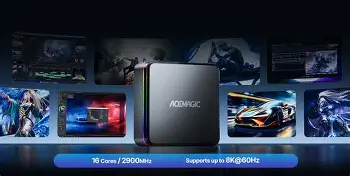
The Acemagic F3A represents the other side of the upgrade coin. If the NZXT keyboard is an upgrade for the hands, the Acemagic F3A is an upgrade for the software experience. Mini PCs have transitioned from underpowered media players to legitimate desktop replacements. The F3A model, in particular, targets users who need the power of a laptop or a desktop but lack the space or the desire for a large tower.
The F3A is often powered by AMD Ryzen architecture, which has become the gold standard for integrated graphics and multi-threaded performance in small form factors. A typical configuration includes a Ryzen 7 or Ryzen 9 mobile-class processor. This means that despite its small size, the F3A can handle 4K video playback, heavy web browsing with dozens of tabs, and even moderate creative work like photo editing or 1080p video rendering. For a user currently struggling with an aging laptop that overheats and throttles, moving to a dedicated Mini PC like the F3A offers a massive jump in "thermal headroom."
Discover deals on Laptops & Computers — updated daily.
Shop Amazon →Connectivity and Internal Expandability
What buyers typically care about in this category is ports. The Acemagic F3A does not disappoint. Unlike modern ultra-portable laptops that force users into a "dongle life," the F3A usually features multiple USB 3.2 ports, dual HDMI or DisplayPort outputs, and often a 2.5Gbps Ethernet port. This makes it the ideal "brain" for a multi-monitor setup. Interestingly, the F3A also offers internal upgradeability. While you cannot upgrade the CPU, users can typically swap out the SO-DIMM RAM and the M.2 NVMe SSD. For someone looking at a long-term investment, the ability to double your RAM three years after purchase is a major advantage over most modern soldered-RAM laptops.
Pros and Cons: Nzxt Function Elite Mini Tkl
- Pro: Solid Construction. The aluminum top plate ensures a premium feel and eliminates the hollow plastic sound found in cheaper alternatives.
- Pro: Hot-Swappable Switches. Future-proofs the investment by allowing users to change the typing feel or replace broken parts without technical expertise.
- Pro: Left-Side Media Controls. An ergonomic win that feels more natural for right-handed mouse users to reach for volume adjustments.
- Pro: Compact Ergonomics. The Mini TKL layout saves desk space, allowing for a more centered mouse position which can reduce shoulder strain.
- Con: Software Dependency. To get the most out of the RGB and macro settings, you must have NZXT CAM running, which some users find resource-heavy.
- Con: Wired Limitation. Most versions of this keyboard rely on a USB-C cable. While this reduces latency, it doesn't offer the "clean desk" look of a wireless Bluetooth board.
Pros and Cons: Acemagic F3A Mini Pc
- Pro: Exceptional Space Efficiency. Provides the power of a mid-range desktop while occupying less than 5% of the physical volume.
- Pro: Impressive Thermal Performance. Dedicated cooling systems in these units often outperform those found in thin-and-light laptops, leading to less performance throttling.
- Pro: Triple Display Support. Most F3A configurations can drive three 4K monitors simultaneously, a massive boon for productivity.
- Pro: Dual Lan/Modern Connectivity. Features like Wi-Fi 6 and high-speed Ethernet make it a versatile tool for home servers or secure office work.
- Con: Integrated Graphics Only. While capable, it will never match a desktop with a dedicated GPU for high-end gaming or 3D rendering.
- Con: External Power Brick. While the PC is small, you still have to manage a relatively large power adapter tucked under the desk.
The Spec Battle: Side-by-Side Comparison
When deciding between these two upgrades, it helps to see how the "specs" of these fundamentally different devices impact a single workspace. Below is a comparison table outlining the key metrics that matter to the modern buyer.
| Feature/Metric | Nzxt Function Elite Mini Tkl | Acemagic F3A Mini Pc |
|---|---|---|
| Primary Function | Input Periphery (User Interface) | Computing Unit (System Engine) |
| Build Material | Aluminum Top / Plastic Base | High-Grade Synthetic / Metal Mesh |
| Upgradeability | Individual Switches & Keycaps | RAM and SSD Storage |
| Connectivity | Detachable USB-C | USB 3.2, HDMI 2.1, DP 1.4, RJ45 |
| Footprint | Small Workspace (approx. 340mm wide) | Ultra-Small (approx. 130mm square) |
| Best Use Case | Typing Precision & Gaming Comfort | Home Office & Media Production |
Real-World Use Cases: Where Should You Invest?
To decide if an upgrade is "worth it," we must look at the specific intent of the buyer. Tech upgrades are rarely about "better numbers" on a sheet; they are about solving friction in daily life.
Scenario A: The Frustrated Laptop User
Imagine a user who owns a 13-inch ultrabook. It’s perfect for coffee shops, but when they get home, they find th…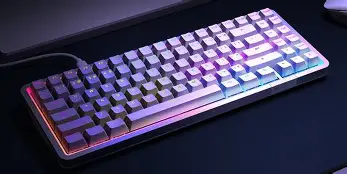
Scenario B: The Desktop Replacement Seeker
Now consider a user whose current computer is constantly "jet-engine" loud, taking minutes to boot, and struggling with basic multitasking. Even the best keyboard in the world won't fix a slow CPU. In this case, the Acemagic F3A Mini Pc is a transformative upgrade. By moving the "brain" of the operation to a dedicated Mini PC, the user gains reliability, speed, and the ability to keep their files on a system that isn't prone to the battery-swelling risks of an aging laptop. They can then use their existing laptop as a secondary device or a travel machine.
Scenario C: The Minimalist Gamer
For the gamer, the choice is more nuanced. The NZXT keyboard offers "low-latency" and "N-key rollover," which are critical for fast-paced titles. However, the Acemagic F3A, especially if equipped with a Ryzen 9 and Radeon 780M graphics, is capable of playing titles like Valorant, League of Legends, or CS2 at respectable frame rates. If you already have a decent PC but hate your keyboard, go NZXT. If you are gaming on a "potato" laptop, the Acemagic is the obvious path forward.
Buying Guide: Key Considerations Before Upgrading
Before you commit your hard-earned money to either the NZXT or the Acemagic, consider these three pillars of the "Laptops & Mini Tech" category:
1. Ergonomics vs. Raw Power
Ask yourself where your current setup "hurts" the most. Is it your wrists and fingers that feel tired after an hour of work? Or is it your patience that feels tired because your computer is lagging? The Nzxt Function Elite is a luxury item for the senses; it improves the *process* of computing. The Acemagic F3A is a utility item for the software; it improves the *result* of computing.
Discover deals on Laptops & Computers — updated daily.
View Offers →2. Desk Real Estate and Portability
Both devices are designed for small spaces. The NZXT is a "Mini TKL," which means it fits easily into a backpack if you want to take your mechanical experience to the office. The Acemagic F3A is also portable, but it requires a monitor and power outlet to function. If you are a "digital nomad" who moves between desks frequently, the keyboard might actually be the more portable "upgrade" because it can be used with any host device.
3. The "Eco-system" Factor
Do you already own other NZXT products? If so, the Function Elite Mini Tkl will sync its lighting with your case fans and CPU cooler through the CAM software. On the other hand, the Acemagic F3A is brand-neutral. It doesn't care what brand of mouse or monitor you use, making it an easier "drop-in" replacement for almost any existing setup.
Is It Worth Upgrading?
The question of value is always subjective, but patterns emerge when we look at the Nzxt Function Elite Mini Tkl and the Acemagic F3A Mini Pc side-by-side. Is it worth upgrading to the NZXT keyboard? Yes, provided you spend more than four hours a day typing. The transition from a membrane or low-profile laptop keyboard to a hot-swappable mechanical board is one of those "you can't go back" moments in tech. It turns a chore into a tactile pleasure.
Is it worth upgrading to the Acemagic F3A? Yes, if your current workstation is a laptop that spends 90% of its time plugged in. By switching to a Mini PC, you free your laptop from the wear and tear of desktop use, gain a massive array of ports, and likely enjoy a quieter, faster computing experience thanks to the superior cooling of the F3A chassis.
Ultimately, these two devices represent the two halves of a perfect modern workstation. The NZXT Function Elite Mini Tkl provides the precision and personality, while the Acemagic F3A Mini Pc provides the power and persistence. If you are looking to revitalize your desk, starting with the keyboard offers the most immediate "feeling" of an upgrade, while the Mini PC offers the most significant functional leap in what your setup can actually achieve.
When making your final decision, look at your existing hardware. If your laptop is less than two years old, your money is likely better spent on the NZXT keyboard to enhance your interaction with that modern hardware. If your laptop is showing its age, skip the peripherals for now and invest in the Acemagic F3A to provide the stable, high-performance foundation your workflow deserves. Both represent the pinnacle of their respective "Mini" categories, proving that in 2026, bigger is rarely better.